

 Türkçe
  Deutsch
  English
History of Raki
History of Raki | The Birth of a Culture: Raki's Thousand-Year Journey
Raki is not merely an alcoholic beverage; it is a thousand-year-old heritage woven into the social fabric of Mediterranean and Middle Eastern cultures. Known as ‘Lion's Milk,’ this anise-flavoured drink has a history as ancient as civilisation itself.
The First Drops: From ‘Arak’ to ‘Raki’
The ancestor of raki, ‘Arak’ (meaning ‘sweat’ in Arabic), emerged in the Middle East, where distillation techniques were developed. The existence of aniseed-flavoured drinks in the Eastern Roman Empire in the 5th century is well documented. However, raki took on its form closest to today's during the Ottoman Empire.
Although there are various theories about the origin of the word ‘raki,’ one of the most widely accepted is that it comes from a type of grape called ‘Razaki,’ which has a high sugar content. These grapes provided ideal raw material for distillation.
From the Ottoman Empire to the Republic: Tavern Culture
Raki became the star attraction of taverns, which were central to social life in the Ottoman Empire, particularly in the 19th century. Taverns, run by non-Muslim subjects, gradually transformed into venues for literary conversations, political debates and gatherings of friends, with the participation of Muslims over time.
With the proclamation of the Republic, raki further cemented its place in the social life of modern Turkey. Its production was standardised and mass-produced under state control (TEKEL).
Raki and Table Manners
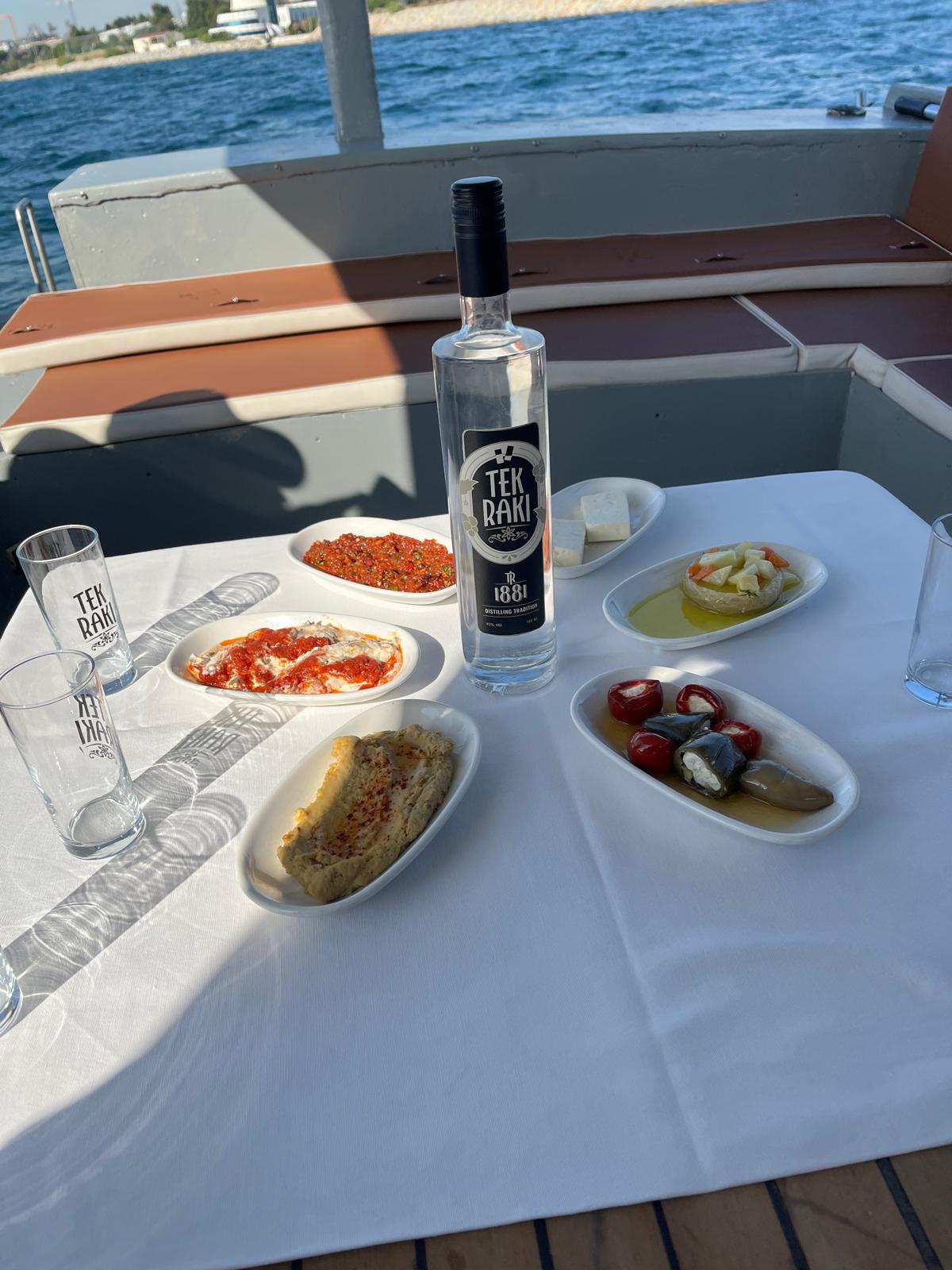
Drinking raki has its own unique ritual. It is consumed slowly and accompanied by conversation at tables laden with a rich variety of meze, known as the ‘Çilingir sofrası’ (lock-picker's table). Its characteristic white colour (lion's milk), formed when anise oil settles upon mixing with water, is part of this drink's identity.
Raki Today: From Tradition to the Future
Today, raki has transcended geographical boundaries to become a globally recognised category of drink. At Tek Raki, we embrace this centuries-old heritage and combine it with Italian production quality to bring it to European tables. We demonstrate our respect for history through the perfect balance in every glass we serve.